
In military, distribution of armament is a critical process. All the authorities involved in armament supply chain need to be secured. Failure in any one node of the system can cause the armament to leak out the system and can go into evil hands. Armament distribution is completely centralised system and are prone to failure even if only one officers committees a mistake. This centralized nature makes it a very unstable system.
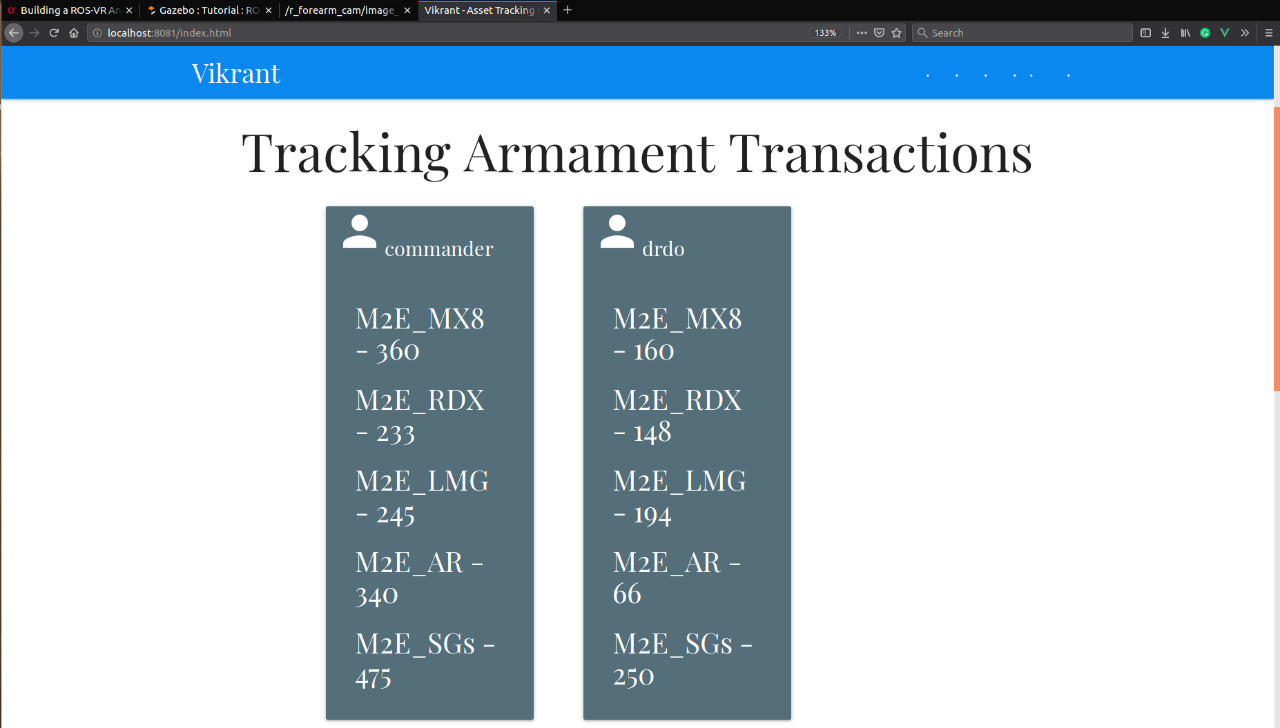
We developed “Vikrant: Armament Tracking in Military Systems” on top of blockchain technology to maintain record of all the transaction of armament throughout it’s life cycle. Our solution begged us 1st prize at ARCS’19. It was a 36-hour long hackathon, organised by IEEE-Computer Soceity at VIT, which saw more than 250 participating teams.
Blockchain is an incorruptible, decentralized, digital ledger of transactions that can be programmed to record not only exchange of information. Critically, for information to be exchange between any two nodes within in a blockchain system, all nodes (or most nodes, depending on the structure) must agree that the exchange of information is legitimate. They do this through a variety of methods; either acting as a recognized trusted party or my solving complex cryptographic problems. Once the exchange is accepted, that exchange is written into a shared copy of a digital ledger that contacts all records of transactions that is effectively unchangeable.
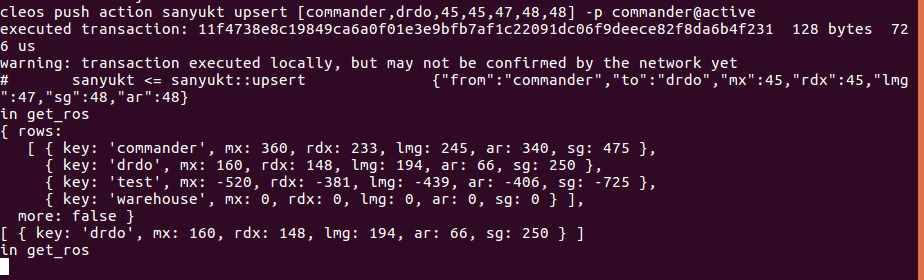
Hence, we saw blockchain as a perfect solution to develop a system on top of it which can track the distribution of the armaments throughout the military. Right from the manufacturing of armament till it completes its life cycle, each and every transaction is being recorded on blockchain and prevents any leakage in the system. Our system maintains a clear records of all the transaction and results into improve accountability of the military system.
Thus, a clear, accountable record of all transactions is available to approved parties within the network. Any attempt to hack the ledger or send an illegitimate order would require attacking all nodes simultaneously. The computing power to achieve this level of penetration is currently beyond even state actors. Moreover, smart contracts or decision rules can be encoded into a blockchain that can automate key functions and trigger intelligent subroutines.
Team Axion
Samarth Chandrawat
Pranav Jain
Sarthak Chowdhary
Pawan Prajapati
 PAWAN PRAJAPATI
Leave a comment